


About The Level
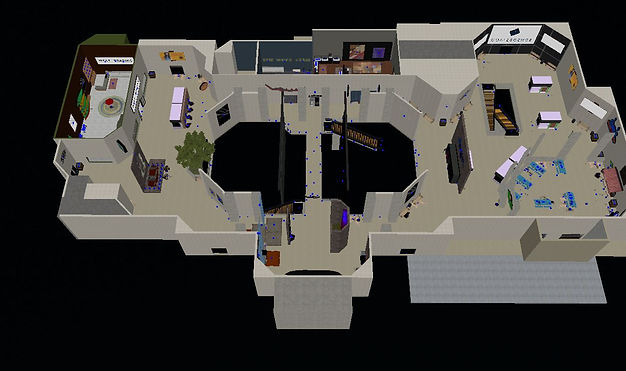
"Retail" is a multiplayer map for Call of Duty: Black Ops 3. The level was built over 5 weeks for the Team Deathmatch (TDM) game mode as well as the Search and Destroy (S&D) game mode. The map features the interior of a sci-fi futuristic mall that has recently been attacked. The map features tight corridors (membranes), mid size battle spaces, and a large central kill-box where chaotic combat comes from above and below.
Design Goals
This focus of this project was about combat flow, pacing, and asymmetrical balance. I wanted the player to be constantly moving through high intensity combat areas and low intensity areas to recover and reload. I also wanted the map to be asymmetrical but feel well balanced and fair.


Combat Flow
Black Ops 3 is a very high paced FPS with parkour and boost jumping elements. The level has tall corridors to allow players to wall run and jump over obstacles, and the cover is spaced out to allow players to flow around and between it quickly. I also made sure to limit potential areas where players could get stuck by limiting angles greater than 45 degrees.
Combat Pacing
The center area of the map is comprised of mid-large size areas with a heavy combat focus. The edges of the map are filled with smaller corridors, or membranes, that allow the player to flank enemy positions, recover from high intensity combat, and reload/switch weapons in a safer environment. This facilitates a balance of high and low intensity encounters.


Asymmetrical Balance
The map is intentionally designed to be asymmetrical, but with sides that parody each other. Lots of balancing had to be done to facilitate objective based game modes such as distance from spawns to objectives, time to reach the upper floor from spawn, cover placement / concentration, and advantageous sightlines. Both spawns can reach the second floor in 7 seconds, and reach each bomb site in 12 seconds.
Maps and Planning
Overview Map (Floor 1)

Overview Map (Floor 2)

Legend

Maps and Planning
Final Overview (Floor 1)

Final Overview (Floor 2)
Design Process
The original design for this map included an exterior parking lot and a slightly different layout on the interior. Through playtesting, I found that there was too much time between fire fights and that the flow to get upstairs was a bit tedious. I ended up cutting the parking lot area which reduced the map size by about 20%. I added a bridge over the center plaza and shifted the escalators so one was pointed at each of the spawns. This allowed players to more seamlessly move upstairs. I found that the membranes along the edge of the map were a bit too long and uninteresting, so I places small outlet stores along them and allowed players to cut through these stores back to the main combat space.
Postmortem
Went Well
Went Wrong
What I Learned
-
Planning. I spent a fair amount of time planning out the level, researching the engine, and gathering resources. Because of this, I was able to hit the ground running with a clear end goal and prototype quickly.
-
Adjusting Scope. The level was initially over scoped, but through careful cutting and communication with stakeholders, peers, and industry pros, I was able to get back in scope and get on track.
-
Feedback. I sought feedback constantly through this project, as I would have less time to iterate than other projects. I had peers, pros, and stakeholders playtest constantly and iterated based on feedback nearly every day.
-
New Editor. Learning Radiant was a challenge and cost some time early on. There are many quirks that have very little documentation, and ironing these out was difficult. I was able to find many resources to help including an online modding community and a contact at Treyarch to help me solve problems and stay on track.
-
Timeline. This project was given half the traditional timeline for projects in this course, and so time management became a huge priority. Though the deadlines were fast and I had less milestones, I was able to keep a steady pace and finish everything on time.
-
Connections. Finding experienced people and quality resources is critical when starting a project in a new engine. Though I had gathered many tutorial resources before the project began, I now know how beneficial it can be to have personal contacts with individuals who can give directed feedback and assistance.
-
MP Balancing. A lot goes into balancing a multiplayer FPS level, and I now have a good idea about how to take each component and see how they all work together. Things such as sightlines, lanes, cover, and verticality all affect each other and understanding that balance will be a huge asset in future projects.
Gallery


